Christmas Wake-Up Call: Stoning, Massacre and a Trump PS on Becket
Wake-up call? Why do we need a Christmas wake-up call?
Consider that for much of the world, Christmas starts right after Thanksgiving. Christmas music plays everywhere, shopping ads begin and the Christmas trees go up. Weeks later, when Christmas Day finally dawns, the excitement’s extinguished in a few hours. Scattered strips of ribbon, wadded up wrapping paper and tinsel are swept up and discarded. Along with a vast number of dirty dishes waiting to be done.
On the day after Christmas, decorations are taken down and put away.
It was just a day, fun and special but nothing more. “The four walls and the prison windows of their gray days,” return.
For liturgical Christians, however, Christmas Day is the first of the nineteen-day Christmas season. Our celebration differs from the world’s. It’s an oxymoronic admixture of joy and sorrow unique to Christianity. We love watching at least two versions of The Christmas Carol, Miracle on 34th Street, and It’s A Wonderful Life. And listening to the corny Christmas music.
But throughout the Christmas season Masses, the gigantic crucifix looms prophetically over the tender scene of the newborn Jesus lying in the manger surrounded by Mary, Joseph, and the animals. We’re both joyous at Jesus’ birth and intensely sorrowful at the agonizing crucifixion we cause.
The Church presses with the liturgy of the subsequent days.
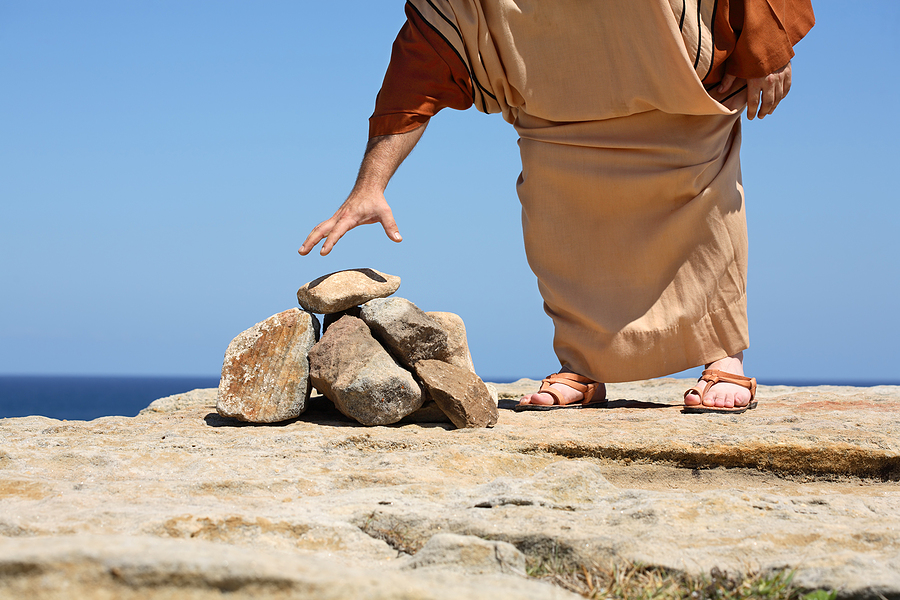
- On December 26th, the first martyr, Saint Stephen, stoned to death by enraged Jews because Stephen had been a follower of Jesus. The Gospel passage carefully notes that Saul was there, watching.
- On December 28th, we commemorate the Holy Innocents. Herod’s jealousy and fear of Jesus impels him to order the deaths of all infant Hebrew boys under two.
- The week ends with the memorial of Saint Thomas Becket on December 29th.
- Our Christmas wake-up call rouses us from the torpor of the feast to plunge us in the blood of the martyrs– lest we think this life is some kind of game.
Saint Thomas Becket
had his flaws.
He experienced the temptations of a life of luxury and influence. He was proud—a bit too proud—of his accomplishments, his position, and his honor, and his tendency toward arrogance was noticed by both his friends and his enemies….From exile in France, Thomas wrote angry letters back to England, threatening those English bishops who had capitulated to Henry’s demands and even excommunicating some of them. While Thomas was right to oppose the king, his impulsive decisions—rapidly alternating between kind words and threats—only made the conflict worse.
My reread of Murder in the Cathedral, like most of my best ideas, wasn’t mine. It’s a prompt from Father Derek Sandowski. Each Christmas, the priest reads TS Eliot’s play about Thomas Becket’s internal battle over the temptation to submit to his king and former friend, Henry ll. Eliot writes in the style of a Greek tragedy, with chorus and in metered verse, which should preclude our understanding but strangely doesn’t. Rather, its rhythm sets up a pace, one that accelerates and becomes tangible as we read. We can almost hear the galloping hoofbeats of the approaching assassins’ horses in the metered cadence.
Becket’s internal battle is revealed through the introduction of four successive tempters, each arguing more and more persuasively that he should submit to the king. Eerily foreshadowing Saint Thomas More’s attempts to appease King Henry VIII, Becket wasn’t eager to die. The archbishop considers whether he could compromise, even return to being Chancellor again. He’d returned from exile in France because of false promises that the king had softened, that he could return to his beloved Canterbury in peace.
With this declaration, Thomas Becket speaks for each human soul:
All my life they have been coming, these feet. All my life I have waited. Death will come only when I am worthy, And if I am worthy, there is no danger. I have therefore only to make perfect my will.
Murder in the Cathedral
Eliot ends his play in exquisitely painful irony and satire. Each of the murderers explains why there was no choice but to kill the archbishop.
We beg you to give us your attention for a few
moments. We know that you may be disposed to judge
unfavourably of our action. You are Englishmen, and
therefore you believe in fair play: and when you see
one man being set upon by four, then your sympathies
are all with the underdog. I respect such feelings….
One soldier’s comment, “No one regrets the necessity for violence more than we do. Unhappily, there are times when violence is the only way in which social justice can be secured,” reads like a maxim for our times.
It’s impossible to read Murder in the Cathedral as merely a historical account. The battle to bound the majesty of the King of the Universe within our deformed human wills rages, ever more intensely as 2025 winds down.
A PS from Trump
On December 29, 2020, outgoing President Donald Trump invited schools, churches, and customary places of worship to commemorate the 850th anniversary of the martyrdom of Saint Thomas Becket. The proclamation begins with these words: “Today is the 850th anniversary of the martyrdom of Saint Thomas Becket on December 29, 1170. Thomas Becket was a statesman, a scholar, a chancellor, a priest, an archbishop, and a lion of religious liberty.”
The wording is strident and sounds like something a pope would write. Or a bishop.
President Donald Trump can best be described as an enigma wrapped up in a mystery. Many have far more colorful ways to describe him with good reason. However, Trump’s decision to honor a Catholic martyr as one of his last presidential acts of his first term is at least curious, if not something other. I’ve read it a few times and have to wonder at the prescience shown in these remarks about American religious liberty and protection of the unborn.
Consider that it’s nearly his last day in office.
He’d lost the election; he was sure he’d won.
And yet he looks back to Saint Thomas Beckett.
We pray for religious believers everywhere who suffer persecution for their faith. We especially pray for their brave and inspiring shepherds — like Cardinal Joseph Zen of Hong Kong and Pastor Wang Yi of Chengdu — who are tireless witnesses to hope.
To honor Thomas Becket’s memory, the crimes against people of faith must stop, prisoners of conscience must be released, laws restricting freedom of religion and belief must be repealed, and the vulnerable, the defenseless, and the oppressed must be protected. The tyranny and murder that shocked the conscience of the Middle Ages must never be allowed to happen again. As long as America stands, we will always defend religious liberty.
A society without religion cannot prosper. A nation without faith cannot endure — [Italics mine] because justice, goodness, and peace cannot prevail without the grace of God.
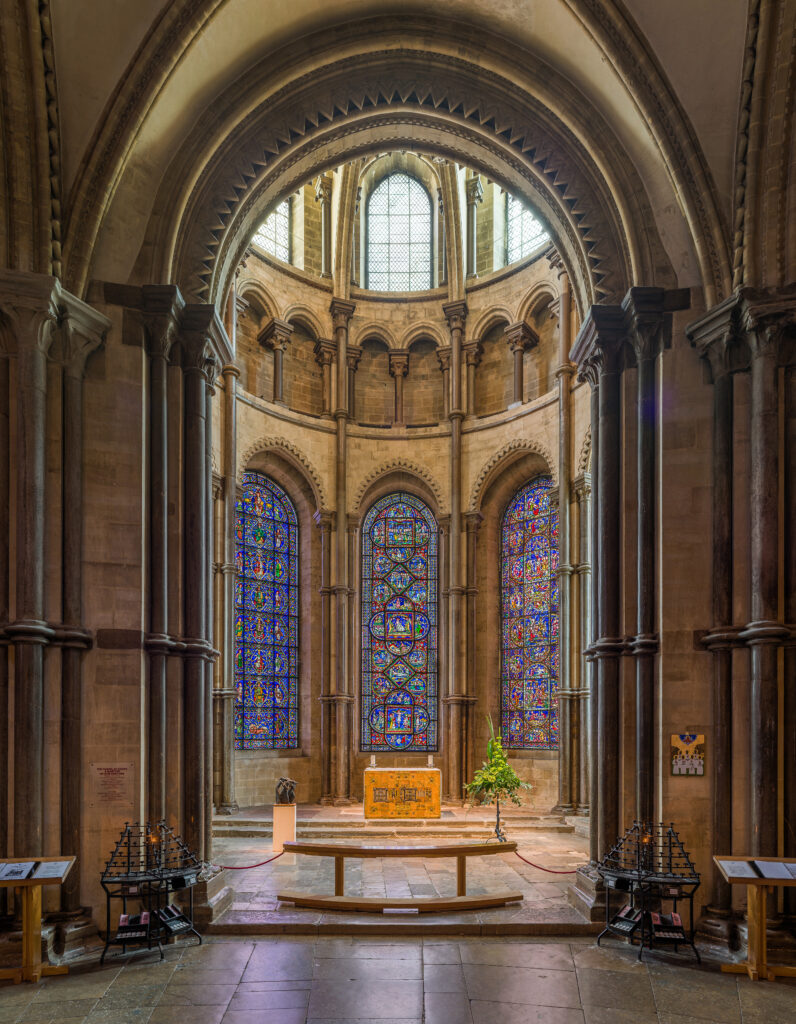
Canterbury Cathedral Beckett’s “Crown chapel.”
Now is my way clear, now is the meaning plain:
Temptation shall not come in this kind again.
The last temptation is the greatest treason: To do the right deed for the wrong reason…..
That the sin of the world is upon our heads; that the
blood of the martyrs and the agony of the saints
Is upon our heads.
Lord, have mercy upon us.
Christ, have mercy upon us.
Lord, have mercy upon us.
Blessed Thomas, pray for us.
Murder in the Cathedral

4 thoughts on “Christmas Wake-Up Call: Stoning, Massacre and a Trump PS on Becket”
Yes. YES! Fiat.
Your words are like precious gems.
We are indeed blessed with the depth of wisdom entrenched in our Catholic faith. You articulate it so well Lin.
What a surprise read President Trumps tribute to Thomas Becket. I had no idea .
Thank you
Thank you for your read and comments, my friend.
Thank you my friend–mau this brand new year infuse us with the grace of being used to save souls!!